
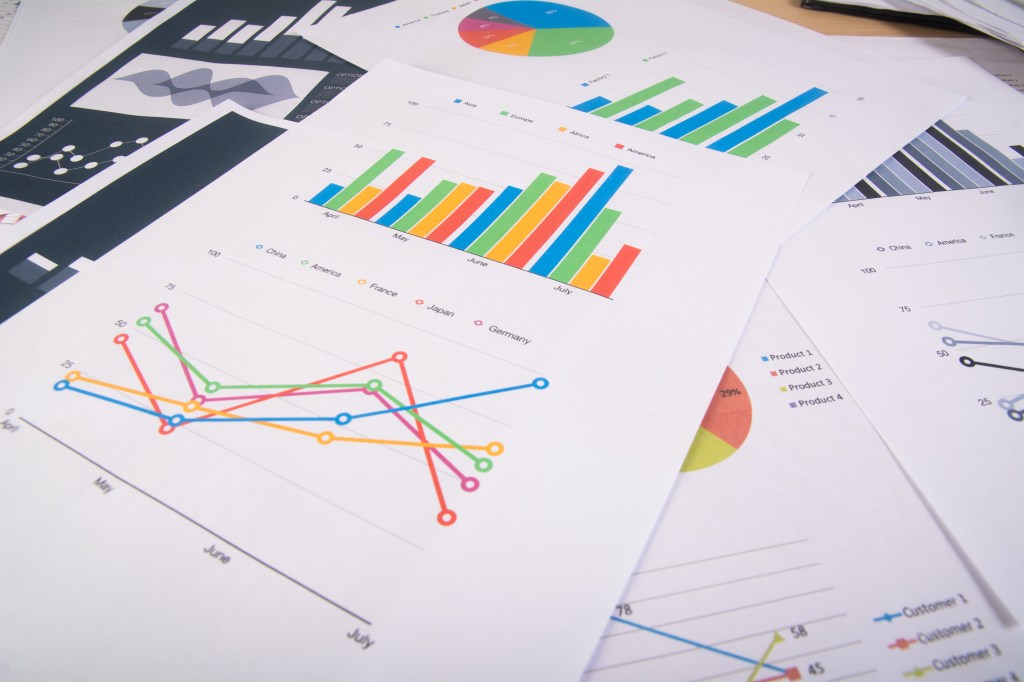
Data analytics has become an indispensable tool for marketers. By leveraging data, businesses can gain valuable insights into customer behaviour, optimise their marketing efforts, and ultimately drive better results. Here’s a guide on how to use data analytics to improve your marketing strategy.

1. Understanding Your Target Audience
The first step in any successful marketing strategy is understanding your target audience. Data analytics allows you to gather detailed information about your customers, such as their demographics, preferences, and behaviours. Tools like Google Analytics and social media insights can help you track user interactions and identify patterns. Analysing this data allows you to create more personalised and effective marketing campaigns.
2. Setting Clear Objectives
Before diving into data analysis, it’s crucial to set clear objectives. What do you want to achieve with your marketing efforts? Whether it’s increasing website traffic, improving conversion rates, or boosting customer engagement, having well-defined goals will guide your data analysis process. For example, if your goal is to increase website traffic, focus on metrics like page views, bounce rates, and referral sources.
3. Collecting Relevant Data
To make informed decisions, you need to collect relevant data. This includes both quantitative data (e.g., website traffic, and sales figures) and qualitative data (e.g., customer feedback, and social media comments). Use tools like Google Analytics, CRM systems, and social media analytics platforms to gather this information. Ensure that the data you collect is accurate and up-to-date.
4. Analysing Data for Insights
Once you have collected the data, the next step is to analyse it for actionable insights. Look for trends, patterns, and correlations that can inform your marketing strategy. For instance, if you notice that a particular demographic is more engaged with your content, you can tailor your campaigns to better target that audience. Use data visualisation tools like Tableau or Power BI to make the analysis process more intuitive and accessible.

5. Implementing Data-Driven Strategies
With insights in hand, it’s time to implement data-driven strategies. This could involve optimising your website for a better user experience, creating targeted ad campaigns, or personalising email marketing efforts. A/B testing is a valuable technique here, allowing you to compare different versions of a campaign to see which performs better. Continuously monitor the results and adjust your strategies based on the data.
6. Measuring and Evaluating Performance
Data analytics doesn’t stop once a campaign is launched. It’s essential to continuously measure and evaluate the performance of your marketing efforts. Track key performance indicators (KPIs) such as conversion rates, customer acquisition costs, and return on investment (ROI). Regularly reviewing these metrics will help you identify areas for improvement and ensure that your marketing strategy remains effective.
7. Embracing Predictive Analytics
Predictive analytics is a powerful tool that uses historical data to forecast future trends. By leveraging machine learning algorithms, you can predict customer behaviour, identify potential opportunities, and mitigate risks. For example, predictive analytics can help you anticipate customer churn and take proactive measures to retain valuable clients.
8. Ensuring Data Privacy and Compliance
As you collect and analyse data, it’s crucial to prioritise data privacy and compliance. Ensure that you are transparent with your customers about how their data is being used and adhere to regulations such as GDPR and CCPA. Implement robust data security measures to protect sensitive information and build trust with your audience.
Conclusion
Data analytics is a game-changer for modern marketing. By understanding your audience, setting clear objectives, collecting relevant data, and continuously analysing and optimising your strategies, you can drive better results and stay ahead of the competition. Embrace the power of data analytics to transform your marketing efforts and achieve your business goals.
 EDS Marketing
Leave a comment